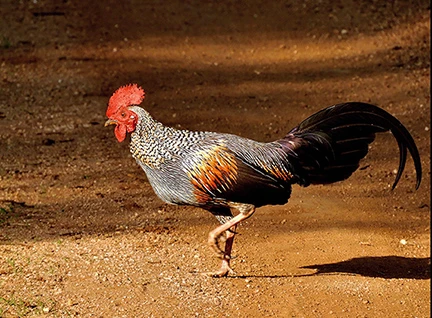
Tetraonini
Grouse are ground-dwelling birds of northern temperate and arctic regions.
Tetraonini is a tribe of birds in the family Phasianidae, order Galliformes, commonly known as grouse. They inhabit temperate and subarctic regions of the Northern Hemisphere, from arctic tundra to pine forests and moorlands. The group includes species such as ptarmigans, prairie-chickens, and capercaillies, and is closely allied with turkeys, which some modern treatments include as basal members of the tribe.
- classification
- Tribe Tetraonini (formerly subfamily Tetraoninae or family Tetraonidae)
- range
- 83°N (rock ptarmigan, northern Greenland) to 28°N (Attwater's prairie-chicken, Texas), or 16°30'N including turkeys (ocellated turkey, Belize)
- size
- True grouse: 31–115 cm length, 0.3–6.5 kg weight; including turkeys: up to 130 cm, 10 kg
- diet
- Primarily vegetation (buds, catkins, leaves, twigs); hatchlings eat insects
- reproduction
- Polygamous in most species; monogamous in red grouse and willow ptarmigan
- conservation
- Most species least concern or near threatened; greater and lesser prairie-chicken vulnerable; Gunnison grouse endangered
Lore & Background
The name 'grouse' is first attested as 'grows' in 1531 and 'grewes' in 1547, thought to derive from a postulated singular 'grow' or 'grew', from Late Latin plural grutas recorded by Gerald of Wales in 1185, probably imitative of black grouse calls. Grouse are compact, heavily-built birds with feathered nostrils; some species, like ptarmigans, have fully feathered legs and toes adapted for snow. Unlike most galliforms, they typically lack spurs, except turkeys and koklass pheasant.
Reader's Guide
Grouse are significant as a major component of vertebrate biomass in arctic and subarctic ecosystems, serving as prey for lynx, foxes, martens, and birds of prey. Their populations can fluctuate sharply with weather and predator numbers. Many species have declined due to habitat loss, though game birds like red grouse and ruffed grouse have benefited from habitat management. The tribe's classification has been refined by mitochondrial DNA studies and phylogenomic analyses, which show turkeys as sister to traditionally defined grouse. Sexual dimorphism is pronounced, with males larger than females, driven by sexual selection and lekking behavior. Grouse feed mainly on vegetation, including conifer needles avoided by other vertebrates, and use symbiotic bacteria in their caeca to digest cellulose. Their dispersal is generally limited, but rock ptarmigan and willow grouse may migrate hundreds of kilometers, with documented crossings of the Denmark Strait.
Did You Know?
- Grouse range from 83°N (rock ptarmigan in northern Greenland) to 28°N (Attwater's prairie-chicken in Texas), or to 16°30'N when including turkeys.
- The name 'grouse' likely originates from the calls of the black grouse, first recorded as 'grows' in 1531.
- Male grouse can be twice as heavy as females in the western capercaillie, the largest true grouse.
- Rock ptarmigan have been found in Iceland with Greenland-origin minerals in their gizzards, having crossed the 300 km wide Denmark Strait.
More in Bird tribes 1-24
Spotted an error? Know more?
This is a living reference — every entry is fact-audited, and reader corrections feed straight into our audit queue. Suggest an edit · See this site's audit record